
Employee moonlighting has become an important workplace topic as remote work, freelancing, and flexible employment opportunities continue to grow. An employee may have a second job, freelance for another company, run a side business, or provide professional services outside their primary employment.
For employers, the challenge is not simply finding out whether an employee has another job. The bigger question is whether outside work creates a conflict of interest, affects performance, violates an employment agreement, or creates security and confidentiality risks.
This guide explains how employers can identify potential moonlighting concerns while maintaining a fair and professional workplace.
What Is Employee Moonlighting?
How to Find Out If an Employee Is Moonlighting generally refers to an employee working for another employer or undertaking additional paid work while maintaining their primary job.
For example, an employee might:
- Work a second part-time job
- Freelance after working hours
- Provide consulting services
- Run a side business
- Work for another company remotely
- Take contract or project-based assignments
Moonlighting is not automatically the same thing as misconduct. Whether it is permitted can depend on the employee’s contract, company policies, the nature of the outside work, working hours, conflicts of interest, and applicable employment laws.
Why Are Employers Concerned About Moonlighting?
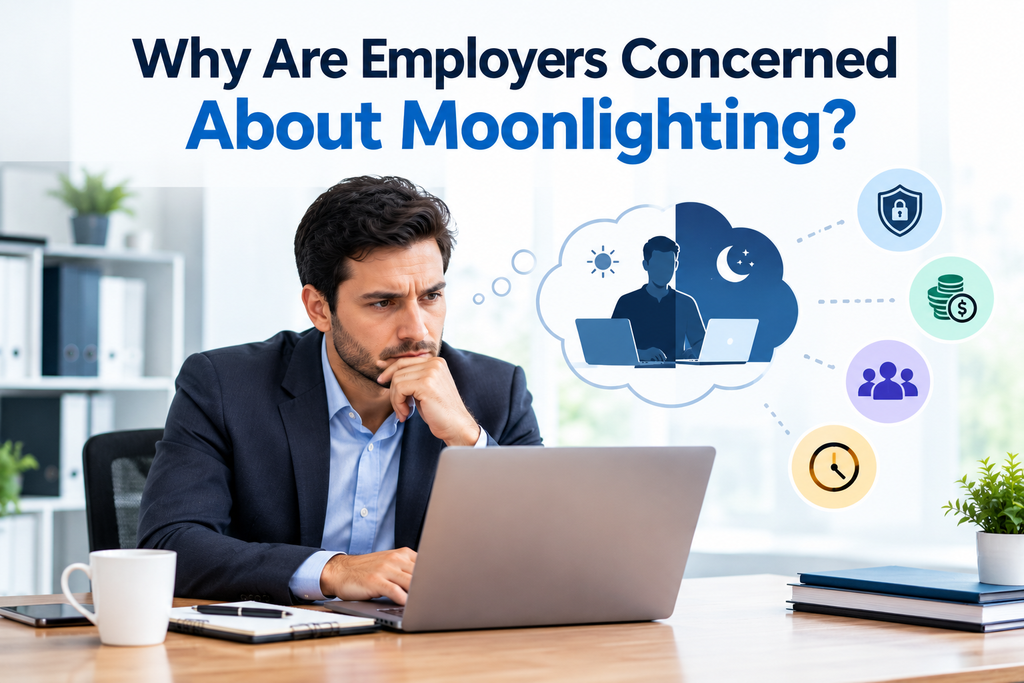
Employers may become concerned about moonlighting when outside work begins affecting the employee’s primary responsibilities.
Potential concerns can include:
1. Declining Work Performance
Repeated missed deadlines, reduced productivity, unexplained absences, or difficulty attending meetings may indicate that an employee is struggling to balance commitments.
However, these signs alone do not prove that an employee is moonlighting. There may be many reasons for a change in performance.
2. Conflicts of Interest
An employee working for a competitor or providing services to a competing business can create a potential conflict of interest.
This is particularly important where the employee has access to confidential business information, customer data, pricing information, or strategic plans.
3. Confidentiality and Data Security
Outside employment can create additional risks if company information, devices, accounts, documents, or intellectual property are improperly shared with another organization.
4. Working During Company Hours
One of the clearest workplace concerns is when an employee performs outside work during paid company hours instead of completing their assigned responsibilities.
5. Excessive Workload
An employee with multiple jobs may experience fatigue or difficulty maintaining expected performance. Employers should focus on observable workplace outcomes rather than making assumptions about an employee’s personal activities.
How to Find Out If an Employee Is Moonlighting
Employers should approach suspected moonlighting carefully. The goal should be to establish relevant facts rather than conduct intrusive surveillance.
You can also read: FindNX is an online hiring platform
1. Review the Employment Agreement
Start by checking the employee’s employment contract and relevant company policies.
Look for provisions covering:
- Outside employment
- Conflicts of interest
- Confidentiality
- Working hours
- Intellectual property
- Non-compete or related restrictions, where legally applicable
- Disclosure requirements
The wording of the agreement and applicable local law matter. Employers should obtain appropriate legal advice before taking action based on contractual restrictions.
2. Look for Changes in Work Performance
Monitor normal workplace indicators such as:
- Missed deadlines
- Unexplained delays
- Reduced availability during scheduled hours
- Declining quality of work
- Repeated unexplained absences
- Failure to attend required meetings
These indicators should be treated as reasons to investigate a workplace issue—not proof of moonlighting.
3. Have a Direct Conversation
If there are legitimate concerns, a private conversation can often be more appropriate than attempting to investigate an employee secretly.
For example, an employer could say:
“We’ve noticed some changes in your availability and recent deadlines. Is there anything affecting your ability to meet your current work responsibilities?”
This allows the employee to explain the situation before the employer reaches a conclusion.
4. Check for Conflicts of Interest
If an employee discloses outside work, determine whether it creates a genuine conflict.
Relevant questions may include:
- Is the outside organization a competitor?
- Does the employee work with the same customers?
- Does the employee use company resources?
- Could confidential information be exposed?
- Does the outside work overlap with company working hours?
- Is the employee’s performance being affected?
The objective should be to evaluate the workplace impact, not simply the existence of a second source of income.
5. Review Company Resources and Access Appropriately
If there is a legitimate security concern, employers may review company systems according to established policies and applicable law.
For example, organizations may have policies governing the use of:
- Company laptops
- Corporate email
- Business applications
- Company networks
- Access credentials
- Confidential documents
Employers should avoid unauthorized access to personal accounts or devices and should follow applicable privacy and employment laws.
6. Look for Publicly Available Professional Information
Public professional profiles may sometimes indicate that an employee has another professional role or business.
For example, publicly available information might include:
- A professional profile
- A business website
- A publicly listed company role
- A portfolio
- Public freelance services
However, public information should be interpreted carefully. A profile does not necessarily establish that an employee is actively working another job or violating company policy.
You can also read: FindNX is an online hiring platform
Signs That May Indicate a Moonlighting Concern
There is no single sign that proves an employee is moonlighting. Employers should consider multiple workplace factors together.
Potential indicators may include:
| Possible Indicator | What It Could Mean |
| Frequent unexplained absences | Availability or scheduling issue |
| Repeated missed deadlines | Workload or performance concern |
| Reduced responsiveness | Scheduling, workload, or other issue |
| Sudden decline in work quality | Performance or capacity concern |
| Outside professional role publicly listed | Possible additional employment |
| Work for a competitor | Potential conflict of interest |
| Use of company resources for outside work | Potential policy/security issue |
The key distinction is between an indicator and evidence. Employers should avoid treating assumptions as established facts.
What Employers Should Avoid
Trying to identify moonlighting can become problematic if employers use invasive or unauthorized methods.
Avoid:
- Secretly accessing personal accounts
- Installing unauthorized monitoring software
- Tracking personal devices
- Reading private messages without appropriate legal authority
- Making accusations without evidence
- Automatically terminating an employee based only on suspicion
- Treating every freelance activity as misconduct
Instead, establish clear policies, document legitimate workplace concerns, and give employees an opportunity to respond.
Create a Clear Moonlighting Policy
One of the most effective ways to manage outside employment is to establish expectations before problems arise.
A company moonlighting policy can explain:
- Whether outside employment is permitted
- When disclosure is required
- What constitutes a conflict of interest
- Restrictions on competitor work
- Protection of confidential information
- Use of company equipment
- Working-hour requirements
- How employees can request approval
Policies should be reviewed for compliance with applicable employment and privacy laws.
How Employers Can Manage Moonlighting Fairly
A practical approach is to focus on business impact rather than assumptions.
If an employee has another job but consistently meets their responsibilities, follows company policies, protects confidential information, and has no relevant conflict of interest, the situation may be different from an employee who performs outside work during company hours or shares confidential information.
Employers should therefore assess each situation based on the actual circumstances, company policies, contractual obligations, and applicable law.
Final Thoughts
Knowing How to Find Out If an Employee Is Moonlighting is less about spying on employees and more about having clear workplace policies, recognizing legitimate performance concerns, communicating openly, and handling potential conflicts appropriately.
Employers should focus on measurable workplace issues such as performance, availability, conflicts of interest, confidentiality, and appropriate use of company resources.
A transparent hiring and workforce-management process can also help businesses build teams whose expectations are clear from the beginning.
Hire the Right Talent With FindNX
Looking for reliable employees for your growing business?
FindNX helps employers post job opportunities and connect with candidates across different industries, locations, and experience levels. Whether you’re hiring freshers, experienced professionals, remote employees, or specialized talent, you can use FindNX to reach people looking for their next career opportunity.
Ready to Hire? Post Your Job on FindNX
Create your job listing and connect with potential candidates today.
Pingback: How to Find Staff: A Practical Guide for Employers
Pingback: Free Hiring Portal in India: Guide for Employers | FindNX
Pingback: 10 Job Posting Platforms in India for Employers | FindNX